

Last week at Rare Disease Day at NIH, the conversation turned—once again—to data silos. The speakers were thoughtful, experienced, and deeply committed. And yet, I had a familiar feeling: we’ve been here before.
We need to harmonize EHR data.
We need a single registry solution.
Patients need to own their data.
These are not new ideas. We insist things must change, yet the silo model persists. Why?
The Uphill Battle We Don’t Talk About
I would argue that we’re fighting human nature.
Every organization believes it can build the better platform, registry, or data model. Once built, it feels logical—even responsible—to ask others to move their data into it.
In other words: everyone wants to solve the silo problem by building a bigger silo.
Gatekeeping often hides behind good intentions—quality control, regulatory compliance, or intellectual contribution—but at its core, it’s an instinct to be in the driver’s seat.
If we truly want to make progress, we need to stop pretending this is just a technical challenge. It’s not. It’s human.
The Year It Took to Unlock “Public” Data
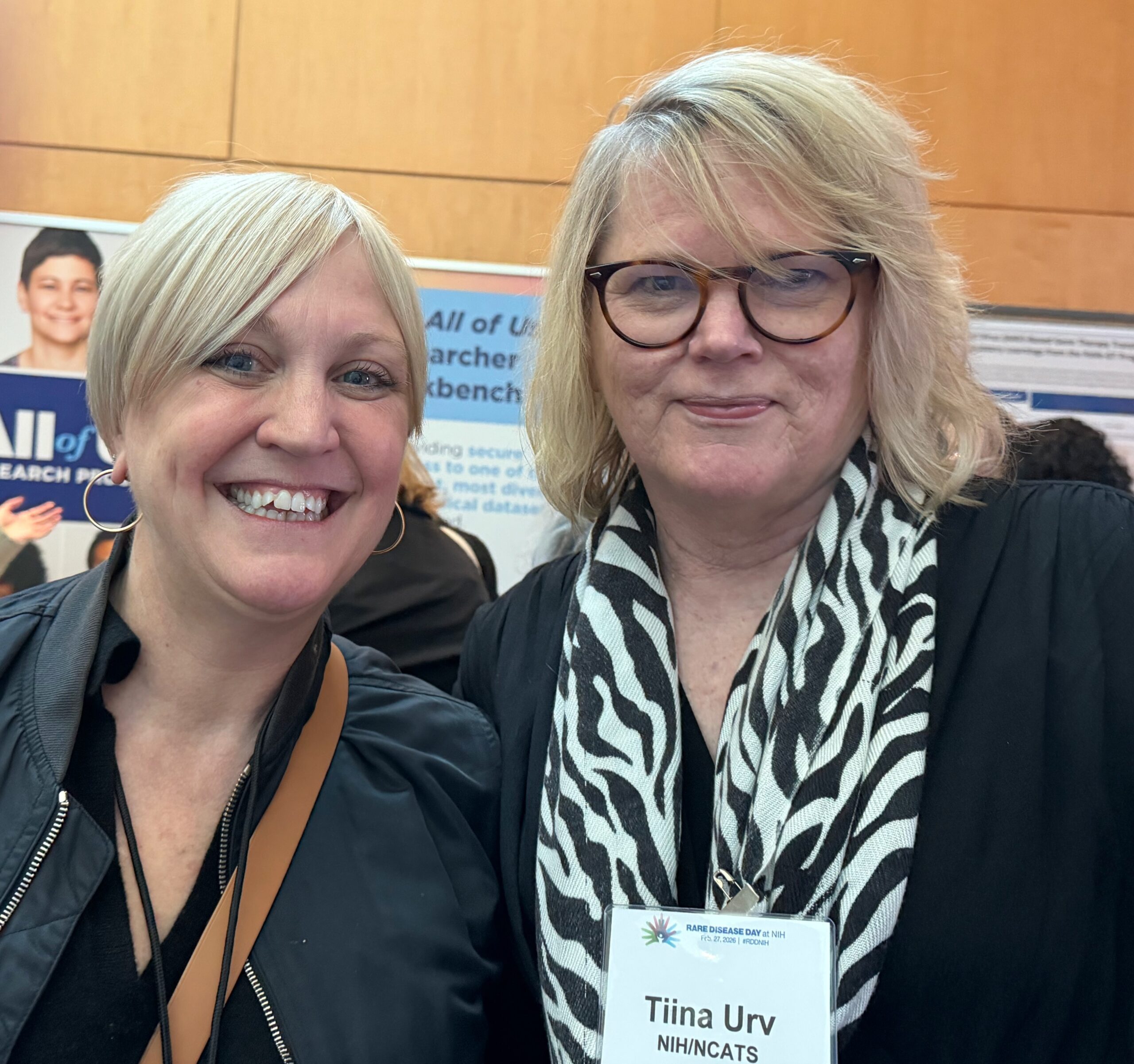
That same day, I ran into Tiina Urv, Program Director at the National Center for Advancing Translational Sciences (NCATS). Ten years ago, Tiina and I were brought together around one shared goal: accelerate progress in rare disease research.
Our work at TREND had shed light on an underrecognized “narcolepsy-like” symptom of Prader-Willi syndrome (PWS). Around that time, Harmony Biosciences was preparing to bring pitolisant to market in the U.S. for the treatment of narcolepsy. They reached out to explore the possibility of pursuing a second indication for PWS.
The scientific rationale was compelling. The operational reality was not.
There was no natural history data on narcolepsy or excessive daytime sleepiness in PWS. No clinical trial had ever studied this endpoint. If Harmony was going to invest in development, they needed evidence that the symptom was real, measurable, and clinically meaningful.
We met with Tiina to ask a simple but daunting question: Was a trial even feasible given the gaps?
She told us about an NCATS-funded natural history study within the Rare Disease Clinical Research Network (RDCRN) in PWS that included sleep-related data points. The data was Federally funded and should have been available for sharing, she immediately connected us with the principal investigators so we could begin analysis.
It took an entire year—and some facilitation led by Tiina—to gain access. Some PIs had plans to publish from the dataset for years and were reluctant to allow others to analyze it.
Once Tiina helped facilitate conversations, we connected with the extraordinary Dr. Daniel Glaze at Texas Children’s Hospital. Dr. Glaze facilitated access and helped us interpret the findings and build the evidence base.
With that foundation, Harmony launched its clinical development program in PWS, now in Phase 3—a testament to the power of breaking down silos.
The Story Doesn’t End There
For all the painstaking effort it took to access that one dataset, something bigger changed. Tiina used the experience to drive changes within the RDCRN data structure, ensuring that future natural history studies funded by the network would be publicly accessible
That is how silos actually start to break down.
Not through slogans.
Not through larger repositories.
But through structural changes that anticipate human nature—and design around it.
At TREND, we solve this by meeting patients and caregivers where they already are and reducing the burden on the community. That allows us to generate deep insights and real-world evidence in weeks—not months—and publish what’s new rather than hold tightly to what’s old.